GUI navigation
The navigation sidebar on the left allows you to access different sections of the interface. The main navigation elements are described below.
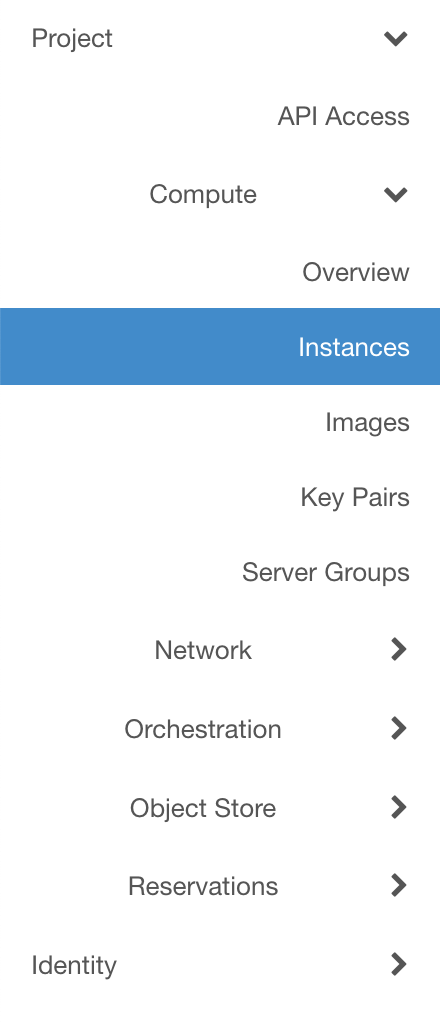
Compute
The Compute section provides interfaces for managing instances, images, and SSH key pairs. It is backed by OpenStack Nova.
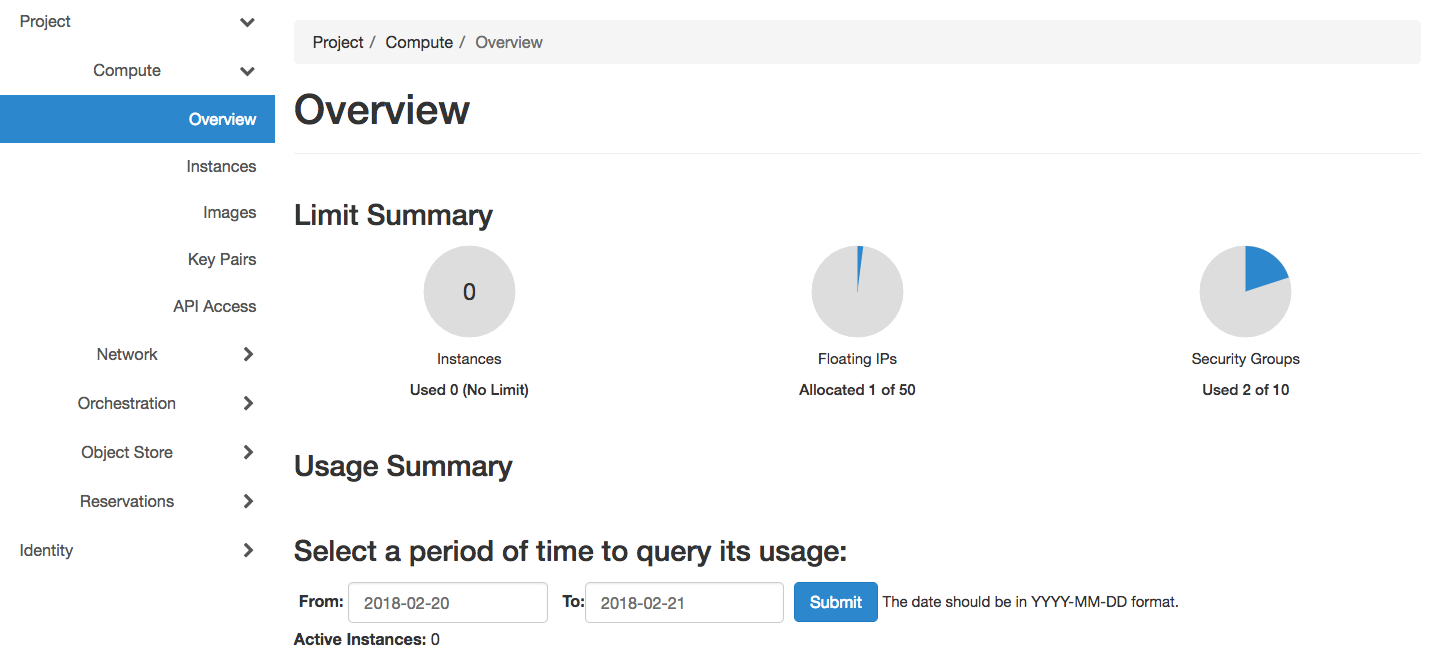
Overview
The Overview page provides a graphical summary of your project’s current resource usage.
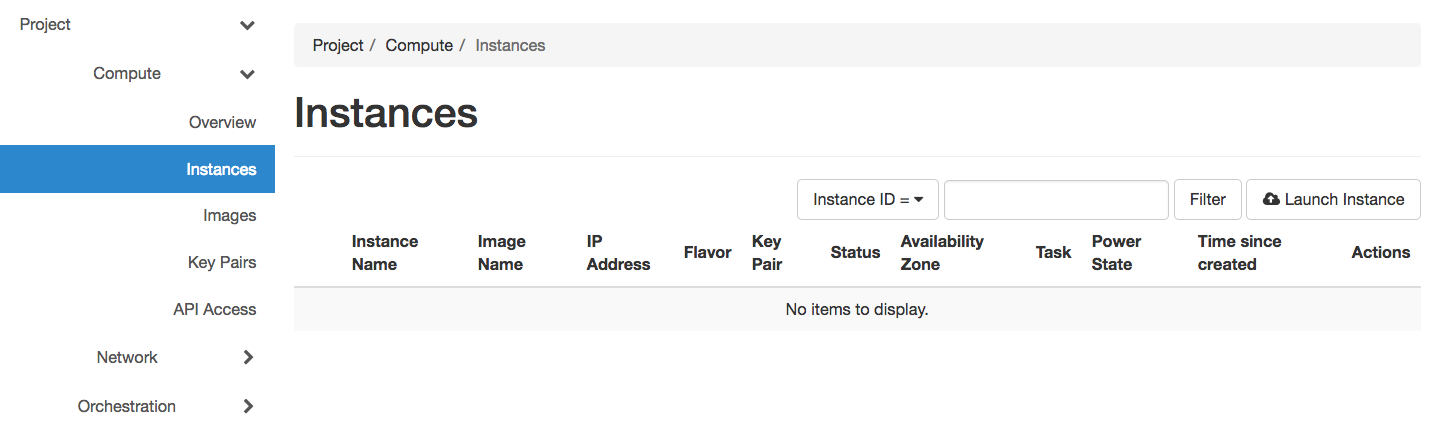
Instances
The Instances page displays your running instances with options to launch, terminate, monitor, or reboot them. For detailed instructions on launching and managing instances, see Bare Metal Instances.
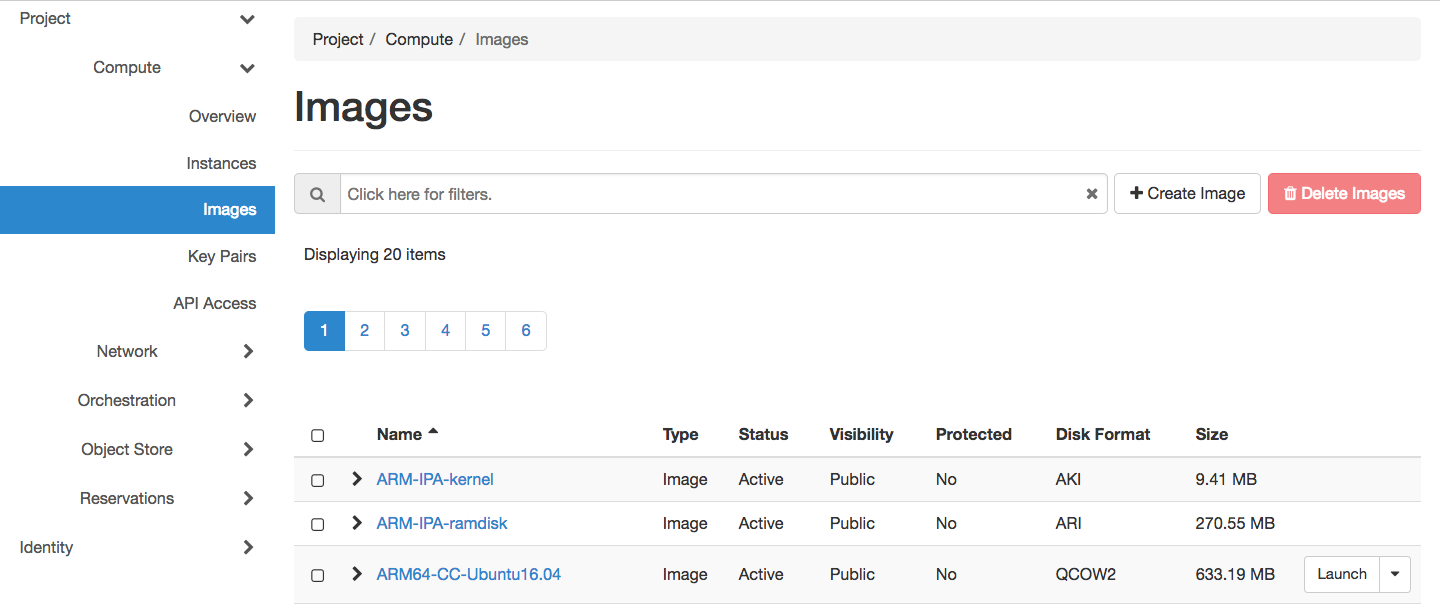
Images
The Images page allows you to view available images and launch instances from them. Images are managed by OpenStack Glance. You can only edit images you own. For comprehensive image management including uploading and sharing, see Images.
Key pairs
The Key Pairs page allows you to create, import and manage SSH key pairs for instance access.
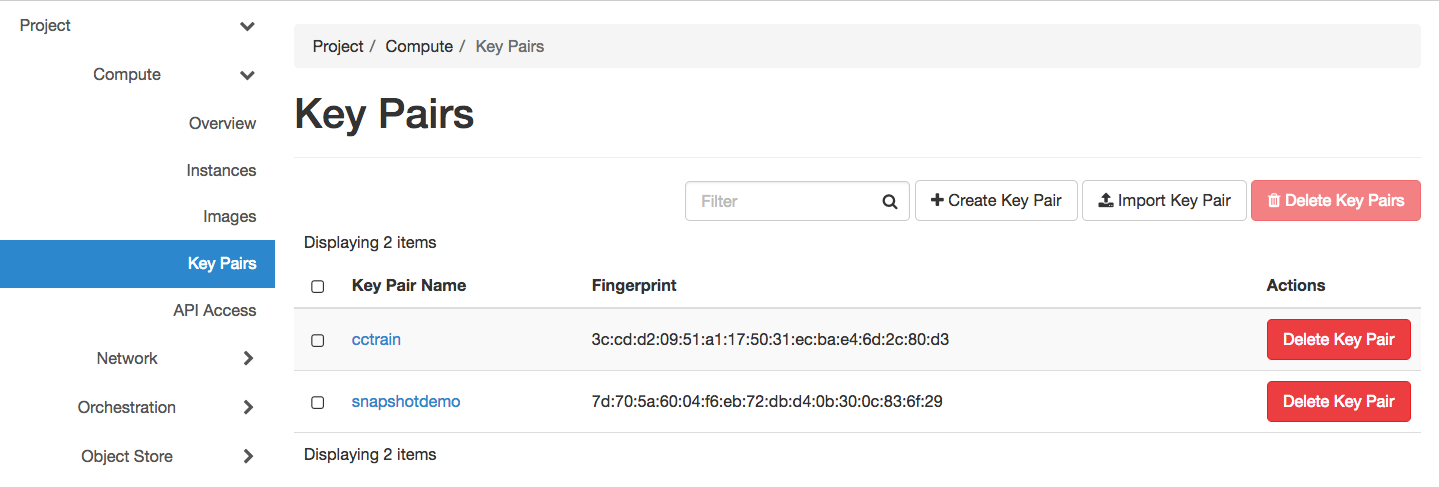
For detailed instructions on creating and importing key pairs, see the guide here.
Network
The Network section provides interfaces for managing virtual network resources. It is backed by OpenStack Neutron. For comprehensive networking instructions, see Networking.
Network topology
The Network Topology page displays your current virtual network topology in topology or graph formats.
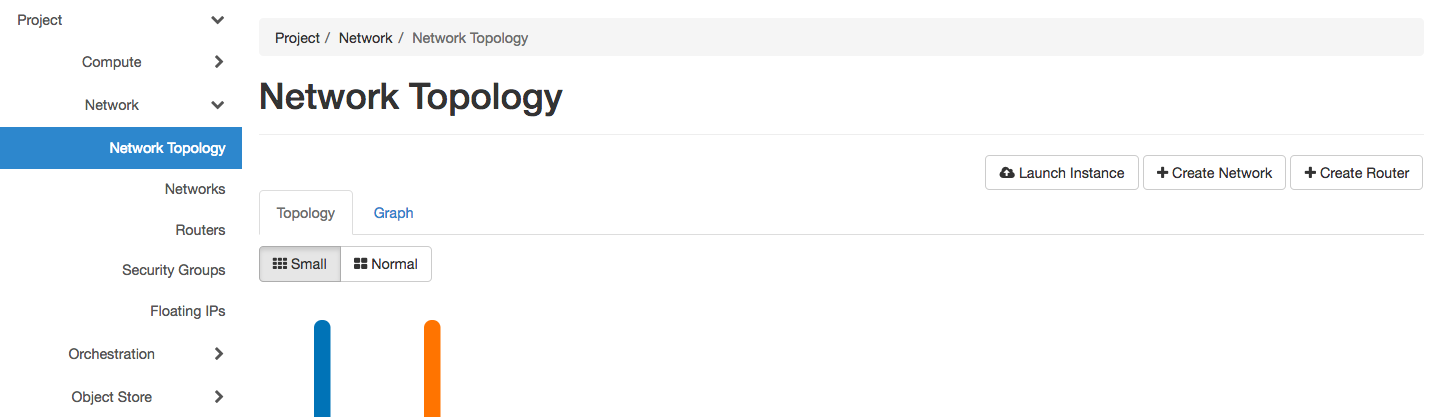
The Network Topology page
Networks, routers, and floating IPs
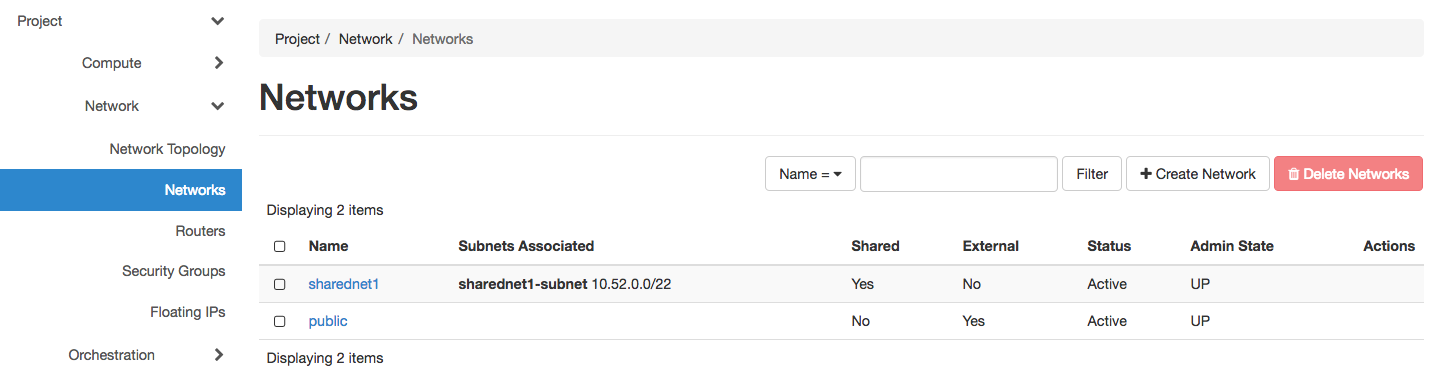
The Networks, Routers, and Floating IPs pages allow you to create and manage these network resources for your project.
Orchestration
The Orchestration section provides interfaces for working with complex appliances and Heat templates. It is backed by OpenStack Heat. For comprehensive instructions, see Complex Appliances.
Stacks
A deployed complex appliance is referred to as a “stack” – just as a deployed single appliance is typically referred to as an “instance”. The Stacks page allows you to launch, rebuild, or terminate stacks.
The Stacks page
Resource types
The Resource Types page lists all Heat resource types available for use in your templates, along with their properties and attributes.
Template versions
The Template Versions page lists the supported Heat Orchestration Template (HOT) versions and the features available in each.
Template generator
The Template Generator provides a graphical interface for building Heat templates without writing YAML by hand. For more on writing templates, see Heat orchestration templates.
Object store
The Containers section provides access to Chameleon’s object/blob storage, backed by OpenStack Swift. For detailed object store instructions, see Object Store.
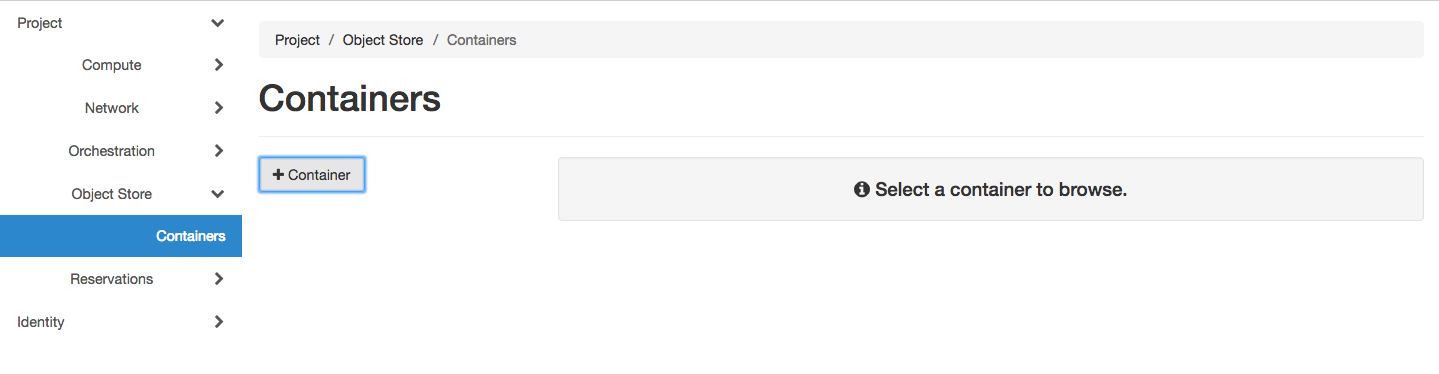
The Containers page
Share
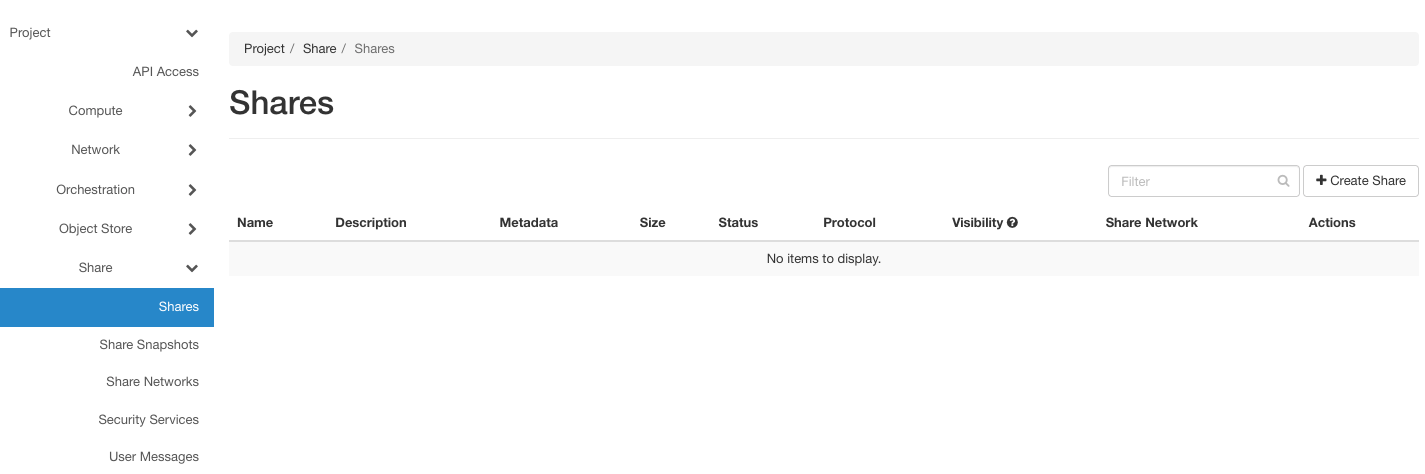
The Share section provides interfaces for managing shared file systems using OpenStack Manila. For detailed instructions, see Shares.
Security services
The Security Services page allows you to configure authentication services (such as Active Directory or LDAP) that can be associated with share networks.
Reservations
The Reservations section allows you to manage your resource leases. It is backed by OpenStack Blazar, Chameleon’s bare metal reservation service. For comprehensive instructions, see Reservations.
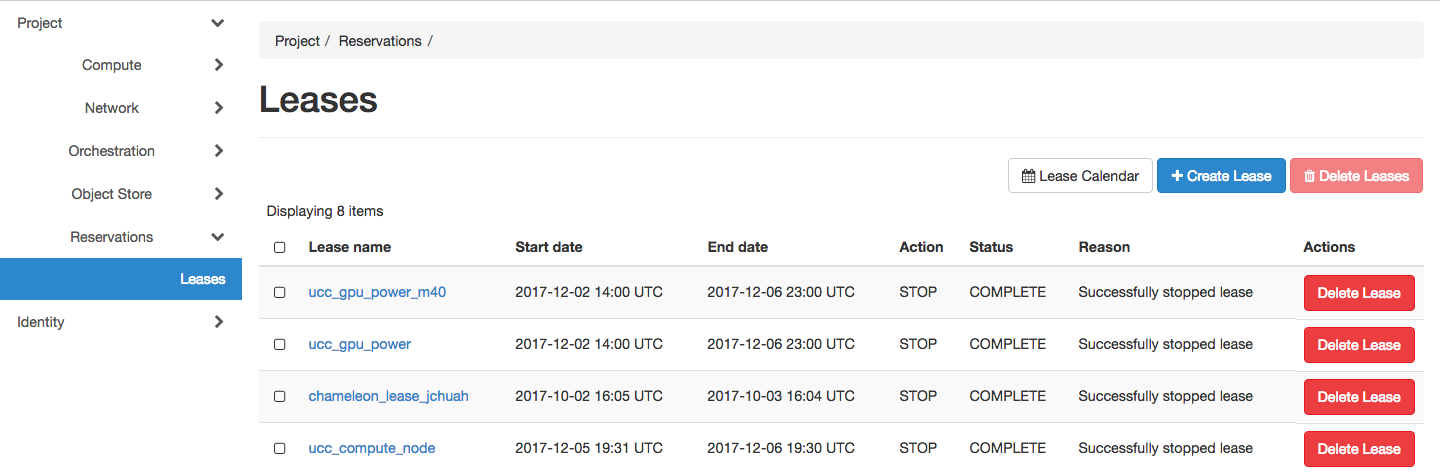
The Leases page
Identity
The Identity section provides interfaces for managing your account’s projects, users, and credentials. It is backed by OpenStack Keystone.
Projects
The Projects page shows projects you belong to and allows you to set your default project. For more on managing project membership and allocations, see Project Management.
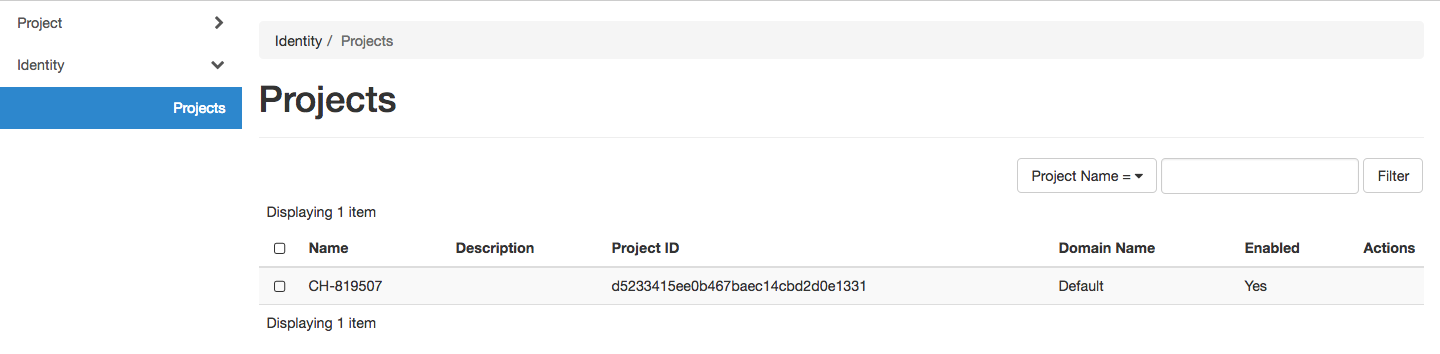
The Projects page
Users
The Users page displays your account information. You can use this page to view your user ID, which is sometimes required when managing project membership or configuring access controls.
Application credentials
The Application Credentials page allows you to create scoped credentials for use by applications or scripts without exposing your primary account password. Application credentials are tied to a specific project and can be given a limited set of roles. For instructions on using application credentials with the CLI, see Creating an application credential.